04.11.2026
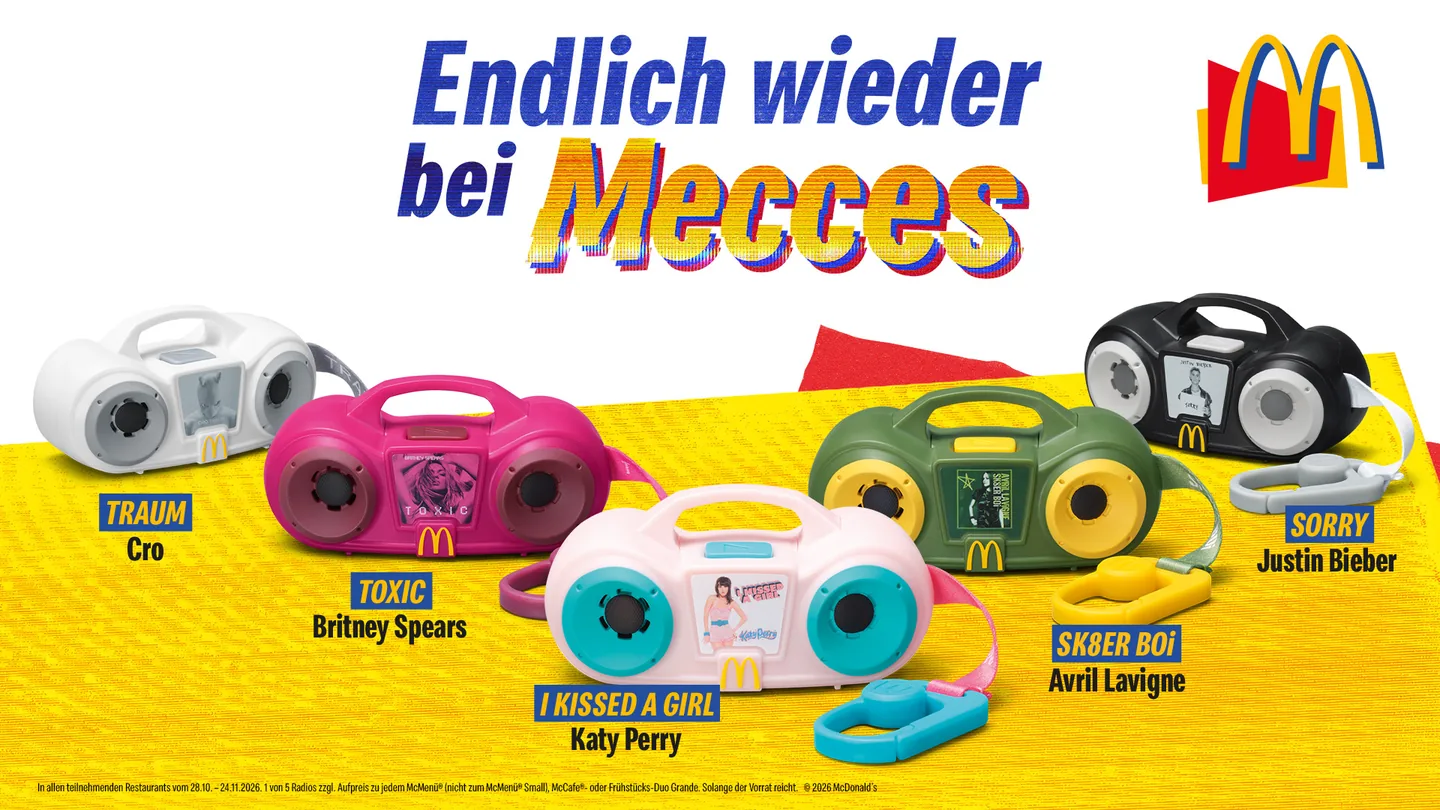
McDonald’s is not selling toys these weeks, but a reunion with your own youth. The radio that used to come with the Happy Meal now comes with the grown-ups’ McMenü. Press the button, thirty seconds of “Toxic” or “Sk8er Boi”, and your teenage years are back. Along with it come the 1955 Burger and the McFarmer, the latter after more than ten years in which fans kept asking for it. All this one day after the farewell to the McRib. Even the campaign’s name, “Endlich wieder bei Mecces” (“Finally back at Mecces”), sounds like the guests, not like the brand manual. The brand calls itself what its guests call it.
Marketing expert and keynote speaker Thomas Daamen, whose talk “Together – From Zero to Love Brand” covers brand leadership and brand strategy of Love Brands at annual kickoffs and sales kick-offs, puts it in a nutshell: a Love Brand does not sell novelty, but belonging. “You don’t recognize a Love Brand by what it sells, but by what its customers would miss,” says Daamen. For him, good brand leadership therefore does not mean constantly adding something new, but knowing what customers hold on to in a brand. McDonald’s leads the way: instead of drowning out the farewell to the McRib with the next novelty, the brand gives its guests back what has long been theirs. Daamen has spent more than 20 years leading and selling brands in the consumer goods industry and knows both sides of the table: “In sales, what counts is what’s new on the shelf. In marketing, what counts is what stays in the mind. A Love Brand is created when marketing and sales pull in the same direction. Because what stays in the mind sells what’s on the shelf.”
Psychology backs this up. Social psychologist Constantine Sedikides and his team show in several experiments that nostalgia strengthens the connection between the past and the present self, namely through the feeling of belonging. Earlier work by the same research group found that it is precisely ruptures that awaken the need for nostalgia. The farewell to the McRib is such a moment. In times of change, people look for support in what they know. Customer understanding therefore does not begin with the question of what customers want tomorrow, but with the question of what they have never forgotten. Memories are a capital that a competitor cannot simply copy. After November 24, the radios will disappear from the restaurants again. What they have awakened remains.
“You can bring back a product. A memory has to be earned,” says Daamen.
Image credit: Image: McDonald’s Deutschland
This article also appeared on openPR .
About Thomas Daamen
Thomas Daamen is a marketing expert and keynote speaker from Munich. For more than 20 years he has led and sold brands in the consumer goods industry, from 2017 to 2021 as Marketing Director of Campari Germany, responsible for Aperol, among other brands. His topic is Love Brand Building: how a brand becomes one that people don’t just buy, but love. He speaks about this at annual kickoffs, sales conferences and leadership events – and about what motivates teams for a brand.
More Love Brand Insights
 “I do not believe anymore in love”: Love Is Made in the Glass, Not on the Billboard
 Aldi Süd and the Monsters: Simplicity Is Honesty
 “Wer hat’s erfunden?”: Ricola Reclaims Its Brand Capital
 “Pimp my Penny”: The punchline is printed on the receipt
 $60 or $3.99? Two brands that understood their customers
 Marketing für’n Arsch? What true fruits Reveals About Real Love Brands
 Attitude beats content – for voices and brands alike
 Rufus & the Premium Brands Week: The “Personal Assistant” Becomes a Digital Bouncer
 From Stream to Shelf: How the Iconic Square Makes Music Tangible Again
 Secondhand Love or Strategic Surrender? Sustainability as the New Currency for Love Brands
 Addiction or Longing? Real Brand Strength Needs No Neurological Traps
 Knighted by Theft: When a Truckload of Hand Soap Proves Brand Value
 Why Real Winners Don’t Bet on Safety — but on Deciding
 Why “Melania” Is a Lesson in Strategic Marketing
Told live: to Thomas Daamen’s keynotes